Best items to resell for profit in 2026 (including thrift store finds)
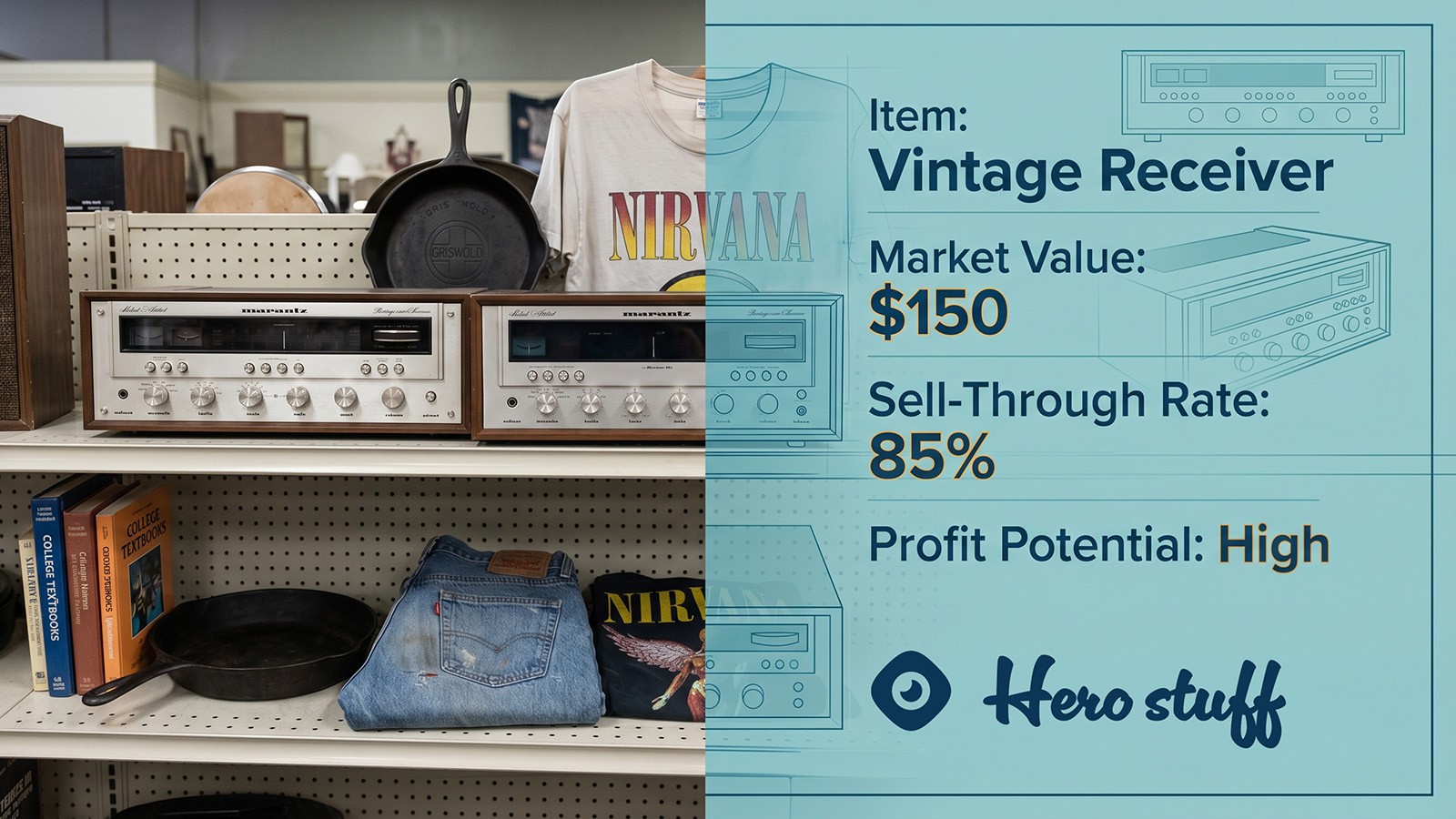
Reselling has changed a lot in the last few years. The pandemic flood of side hustlers has thinned out, but the people who stuck around are making real money — and the market is bigger than ever.
The U.S. secondhand market is now worth an estimated $61 billion, up 8.2% from 2025 (Capital One Shopping), and 69% of Americans say they're more likely to buy or sell secondhand when the economy feels uncertain, per OfferUp research (DontPayFull).
That demand cuts both ways. Thrift stores, estate sales, garage sales, and even your own closet are full of items that someone, somewhere, will pay good money for. The trick is knowing what to grab and what to leave behind.
This guide walks through the categories that are still printing money in 2026, where to find them, and how to make smart sourcing decisions on the spot — even when you're standing in a dusty thrift store with five minutes before you have to pick up your kid.
What makes an item worth reselling
Before we get into specific categories, let's talk about the three things that actually determine whether an item is worth your time. Most beginners get distracted by the dollar amount on the sold listing and forget everything else.
Margin is the obvious one. If you can buy something for $5 and sell it for $50, that's a healthy margin. But you need to subtract platform fees, shipping costs, and the time it takes to clean, photograph, and list the item. For most sellers, Ebay takes 14 to 16% of the total sale amount, including a final value fee of 12.7 to 15.3% depending on category, plus a $0.30 to $0.40 per-order fee (ListingForge). A $45 profit becomes $25 pretty quickly once you account for everything. Our breakdown of Ebay fees in 2026 walks through this in more detail.
Velocity is how fast an item sells. A vintage lamp might be worth $200, but if it sits in your garage for eight months, it's tying up cash you could be using to flip ten other items. Experienced resellers track this with sell-through rate (STR) — the percentage of active listings that actually sold within a given timeframe, typically 90 days. An item with a $200 sold price is worthless if only 10% of listings move. Above 60% STR is a green light. Below 40% means proceed with caution and only buy at a steep discount (Underpriced AI).
Ease of shipping is the silent killer of reselling profits. A 50-pound treadmill might have a great margin on paper, but the shipping cost, the box, the protective packaging, and the trip to UPS will eat your weekend. Lightweight, durable, easy-to-pack items are a reseller's best friend.
The sweet spot is items that hit all three: decent margin, sells in under a month, and ships in a standard box without drama.
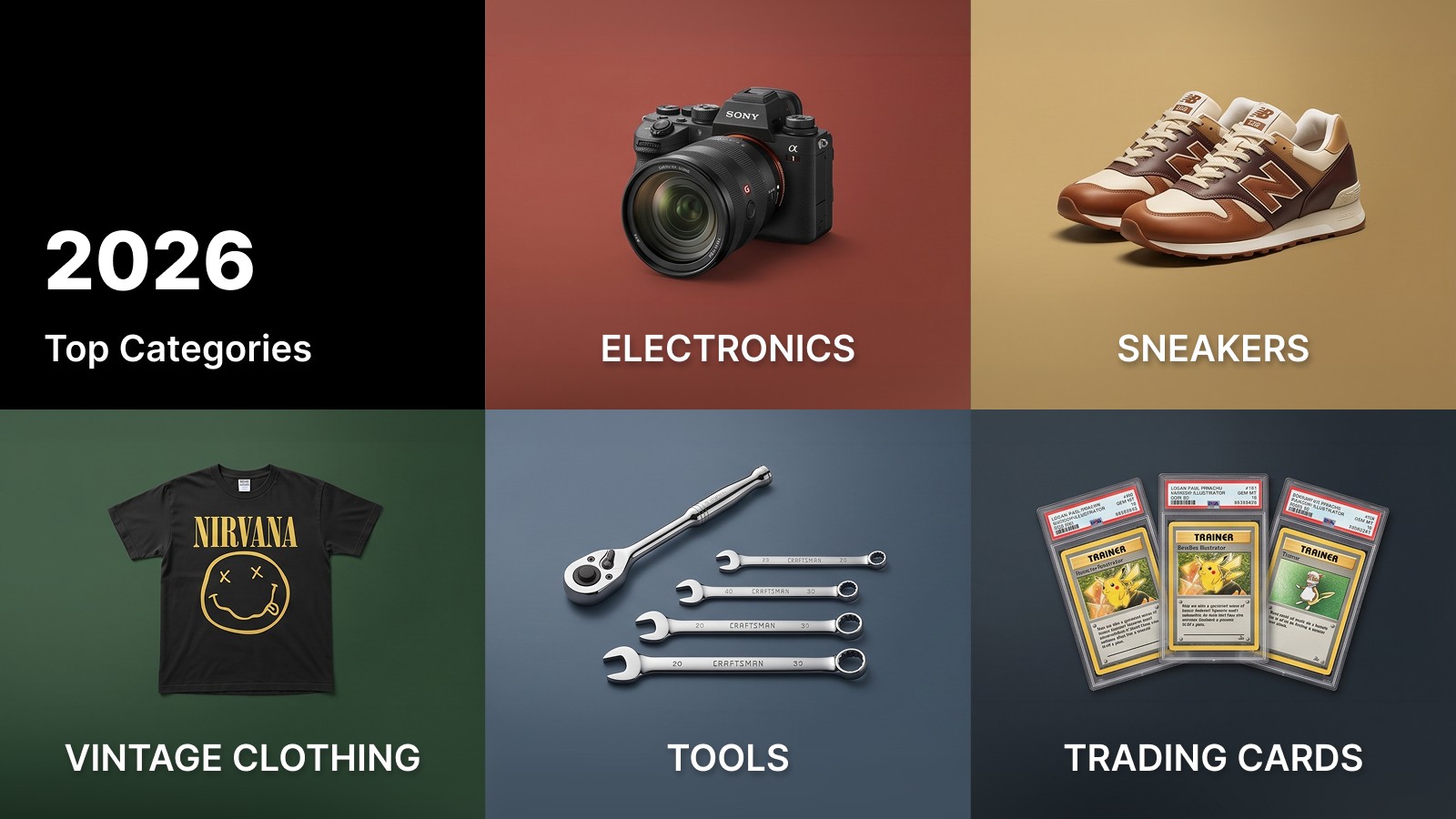
Top categories that are still working in 2026
Electronics
Used electronics remain one of the most reliable categories, especially smaller items like Apple products, gaming consoles, headphones, and lenses. Roughly 300 million used smartphones shipped globally in 2023, and the refurbished smartphone market continues to grow at above 5% annually, per Statista (DontPayFull).
The reason electronics work so well: they have standardized specifications that make condition grading more reliable, with less of the "is this worth what they're asking?" friction that plagues fashion resale.
A few electronics worth keeping an eye out for:
iPhones and iPads (always factory reset them properly before selling)
Nintendo Switch consoles and games
Older video game consoles like the PS2, original Xbox, and GameCube
Vintage stereo equipment from brands like Marantz, Pioneer, and Technics
Camera lenses, especially older manual focus glass
Apple AirPods and Beats headphones
Vintage microphones and audio interfaces. With more people creating content from home, a $30 thrift store mixer can easily become a $200+ sale (Flippd)
Sneakers
The hype sneaker market cooled off after the wild 2020 to 2022 run, but classic silhouettes and limited drops still move fast. Ebay has actually leaned into this category. In 2024, Ebay introduced a tiered rate for sneakers to compete with StockX and GOAT (Underpriced), with lower fees on athletic shoes priced at $150 or more.
Authentication matters more than ever. Fakes have gotten really good, and a single bad sale on Ebay can tank your seller rating. If you're new to sneakers, stick to common, easy-to-verify pairs until you build up your eye.
Trading cards
Trading cards have settled into more sustainable price ranges after the bubble years, but the high end is wilder than ever. In February 2026, Logan Paul's PSA 10 Pikachu Illustrator sold at Goldin Auctions for $16,492,000 😱 the most expensive trading card ever sold at auction (Vape TM). And the broader market is real: spending on Pokémon and other non-sports trading cards jumped 350% between 2020 and 2025, according to market research firm Circana.
For thrift store and garage sale flippers, the opportunity is in older, sealed, or graded items. Vintage Wizards of the Coast Pokémon cards have shown 30 to 50% price increases heading into Pokémon's 30th anniversary year (Pokemon Price Tracker).
Watch for sealed booster boxes at estate sales. They're often pulled out of basements untouched and the sellers have no idea what they're worth.
Vintage clothing
This is one of the most exciting categories right now, and the data backs it up. ThredUp's 2025 Resale Report notes that the online resale sector grew by 23% in 2024, significantly outpacing the broader retail clothing market (Yahoo Finance).
Y2K fashion, 90s streetwear, vintage band tees, and old workwear are all in high demand. Brands to keep an eye out for: Carhartt, Dickies, vintage Levi's (especially "Big E" tags from before 1971), Polo Ralph Lauren, vintage Patagonia, Stüssy, and old Harley Davidson tees.
The thrift store goldmine here is real. A genuine Nirvana tour shirt can command $150 to $400, depending on condition and rarity (Flippd). Outdoor clothing from brands like Patagonia is frequently mispriced at thrift stores and returns $30 to $60 profit per piece once you know the labels to watch for (Underpriced).
Tools
Tools are wildly underrated by new resellers. Older American-made hand tools (Snap-on, Mac Tools, Craftsman from before 2010) are sought after by mechanics and collectors. Quality brands like DeWalt, Milwaukee, and Snap-on maintain strong resale values, and even vintage hand tools from companies like Stanley command premium prices among collectors (Flippd).
Estate sales are particularly good for tools. Older men accumulated huge collections over decades, and when they pass away, the families often have no idea what anything is worth.
Where to source inventory
The best resellers have a sourcing routine. Facebook Marketplace is the highest-volume source in 2026, while thrift stores, estate sales, and garage sales remain excellent for specialized categories where you have knowledge (SaleHoo).
Garage sales are still the highest-margin source if you're willing to put in the legwork. Get there early, bring cash, and don't be afraid to negotiate. The first hour is when the deals happen.
Estate sales are where bigger fish live. You'll pay more than at a garage sale, but you'll find higher-quality items and rarer pieces. Sign up for email lists from estate sale companies in your area so you know what's coming.
Thrift stores are the most consistent source because they restock daily. There are over 25,000 resale, consignment, and not-for-profit resale shops in the U.S. (Capital One Shopping). Goodwill, Salvation Army, and smaller local thrifts each have their own personality. Some price aggressively, others almost give things away. Most shops have a day or two each month where items are deeply discounted to make room for the next batch (Money Crashers).
Online sourcing sounds counterintuitive (buying online to sell online?) but it works when you spot mispriced items on Facebook Marketplace, Craigslist, or even Ebay itself. People list items with bad photos, vague titles, or low starting bids all the time.
Auctions are advanced mode. Live in-person auctions and online auction sites can be incredible sources, but you need to know what you're doing or you'll overpay.
Thrift store reselling: what to look for and how to price on the spot
Thrift store reselling is its own skill. You're not browsing leisurely. You're scanning shelves at speed, making quick decisions, and pricing in your head while keeping an eye on the clock.
Here's how experienced thrifters approach a store:
Build a route. Most resellers walk the same path through every thrift store. Usually it's electronics, then men's clothing (where the vintage tees and workwear hide), then housewares for vintage Pyrex and stoneware, then books and media. Having a route means you don't waste time wandering.
Train your eye for tags and labels. Old union-made tags ("Made in USA" with a union number), single-stitch t-shirts (a sign of vintage construction), and specific brand tags from past eras are visual shortcuts. After a few months of thrifting, you'll spot these from across the aisle.
Check the bottom of pottery and ceramics. Maker's marks on the bottom of vases, bowls, and figurines tell you everything. Roseville, Hull, McCoy, and Frankoma pottery can sell for $50 to $300+ depending on the piece. Mid-century stamps from Scandinavia (Arabia, Royal Copenhagen) are gold.
Look at media you'd otherwise ignore. One Side Hustle Nation guest reported $4K/month flipping books via ScoutIQ scanning at thrift stores, and vinyl saw a genuine renaissance, with 50 to 100% margins on collectible vinyl and 100 to 500% margins on sealed VHS, cassettes, and first-edition books (SaleHoo). Out-of-print books, original pressing vinyl, and old video games are all categories where the average shopper sees junk and the average reseller sees money.
Test electronics if you can. Most thrift stores have an outlet near the electronics section. Plug it in. If they say no, factor that risk into your offer price.
Pricing on the spot comes down to one rule: know your numbers before you walk in. Never price based on what other sellers are asking. Price based on what buyers have actually paid (Underpriced AI). A vintage band tee in good condition is usually $40 to $150. A pair of clean Carhartt double-knee pants is usually $30 to $80. Roseville pottery is $40 to $200 depending on the pattern.
If you're not sure, this is exactly where a real-time pricing tool earns its keep. How much is this worth? lets you text a photo from the store and get an instant resale price based on sold listings from Ebay and Facebook Marketplace. It's faster than scrolling through completed listings on your phone with shaky hands and a cart in your way.
Items that look worthless but sell fast
Some of the best resale items don't look like much. New thrifters walk past these every day. Here's a short list of "boring" stuff that moves quickly:
Old textbooks, especially nursing, engineering, and law books published in the last five years. Medical, engineering, and computer science texts often sell for $50 to $200+, even when purchased for under $5 (Flippd).
Cast iron pans, even rusty ones. Lodge, Griswold, and Wagner brands are particularly desirable. A $4 thrift find can clean up into a $40 to $80 sale.
Pyrex bowls and casserole dishes in vintage patterns. The "Gooseberry" and "Butterprint" patterns can hit $80 to $150 for a single piece.
Sewing patterns from the 60s and 70s. They look like junk paper, but unopened vintage patterns sell for $10 to $25 each, and listing them in lots is easy money.
Old cookbooks from regional churches and community groups. The weirder and more local, the better.
Stainless steel water bottles and lunchboxes from defunct Kickstarter brands.
Polo shirts, especially vintage Ralph Lauren, with embroidered crests, big logos, or unusual color combinations.
Boring office supplies like vintage Swingline staplers, old fountain pens, and mid-century desk lamps.
Power cords and adapters for specific old electronics. The original Nintendo, Game Boy, and old camera batteries. Collectors need these and they're hard to find.
Y2K-era accessories. Von Dutch trucker hats sitting in a bin for $3 sell for $35 to $50 on Depop (Underpriced).
The pattern here is that "ugly" or "old-fashioned" items often have the highest margins because the average person doesn't know what they're looking at.
How to quickly check resale value before you buy
The single most important skill in reselling is being able to quickly verify what something is worth before you spend money on it. Here's the workflow most pros use:
Search the exact item on Ebay. Use the search bar, then filter to "Sold listings." This shows you what items have actually sold for, not what people are asking. Asking prices are often fantasy.
Check the date range. A sold listing from two years ago isn't great evidence of current value. Look for sales in the last 30 to 90 days.
Look at the condition of the comps. A graded card sold for $200 doesn't tell you anything about the ungraded one in your hand. A "Good" condition item and an "Excellent" condition item of the same product can have 30 to 60% price differences (Underpriced AI).
Estimate fees and shipping. Subtract fees (roughly 13 to 15% on Ebay), shipping, and your buy-in price (Underpriced). Add another few dollars for supplies.
Decide on your buy price. Most resellers want to buy for 25% to 33% of what they'll sell for, after fees. If you clear at least $20 net and the item sells within 30 days, it passes.
This whole workflow takes about 30 seconds once you've done it a hundred times.
Using Hero Stuff to price and list finds on the go
Once you've decided to buy, the next bottleneck is listing. The number of resellers who have piles of unsold inventory in their garage is staggering. The items don't make money sitting in a tote.
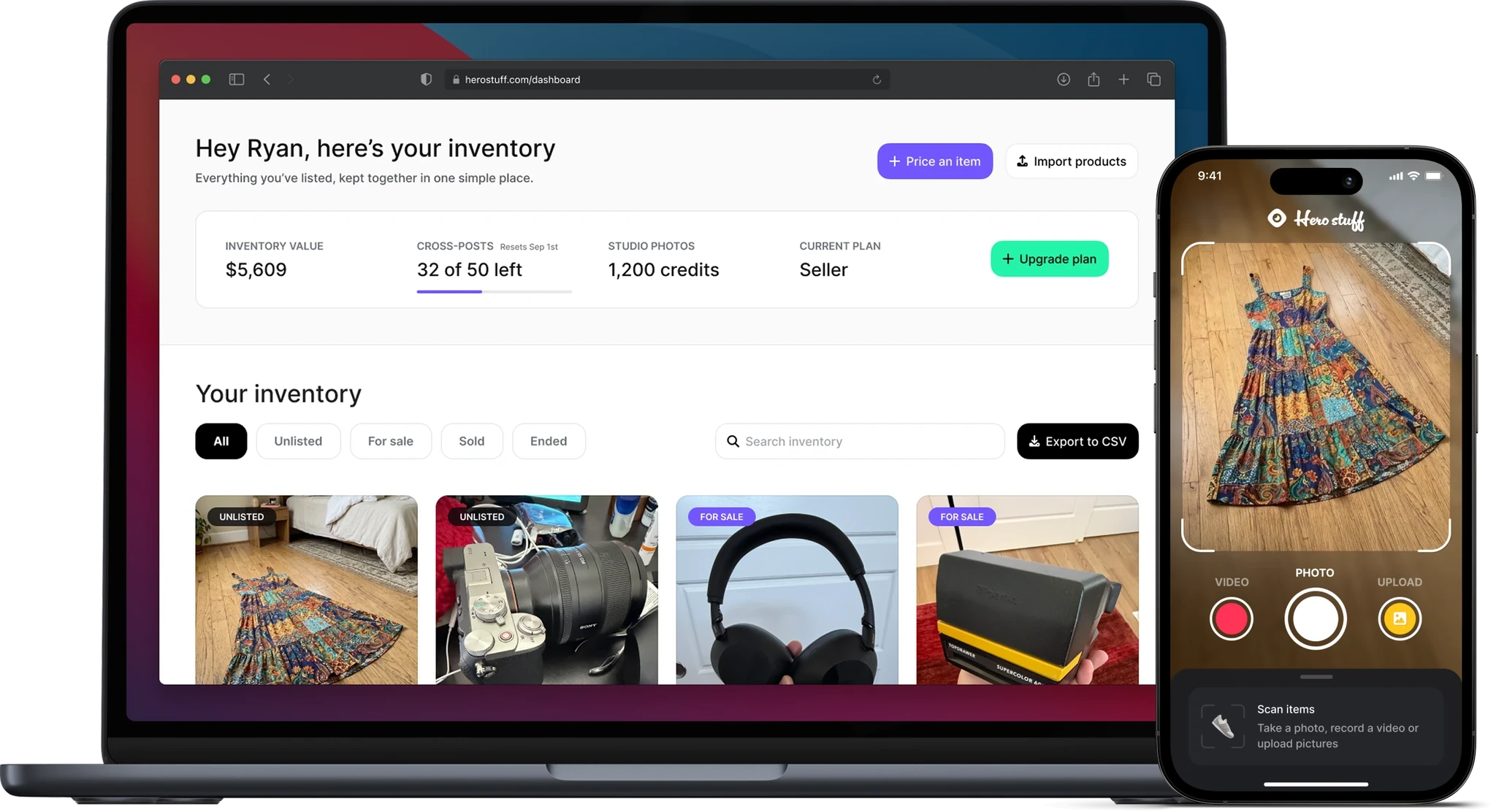
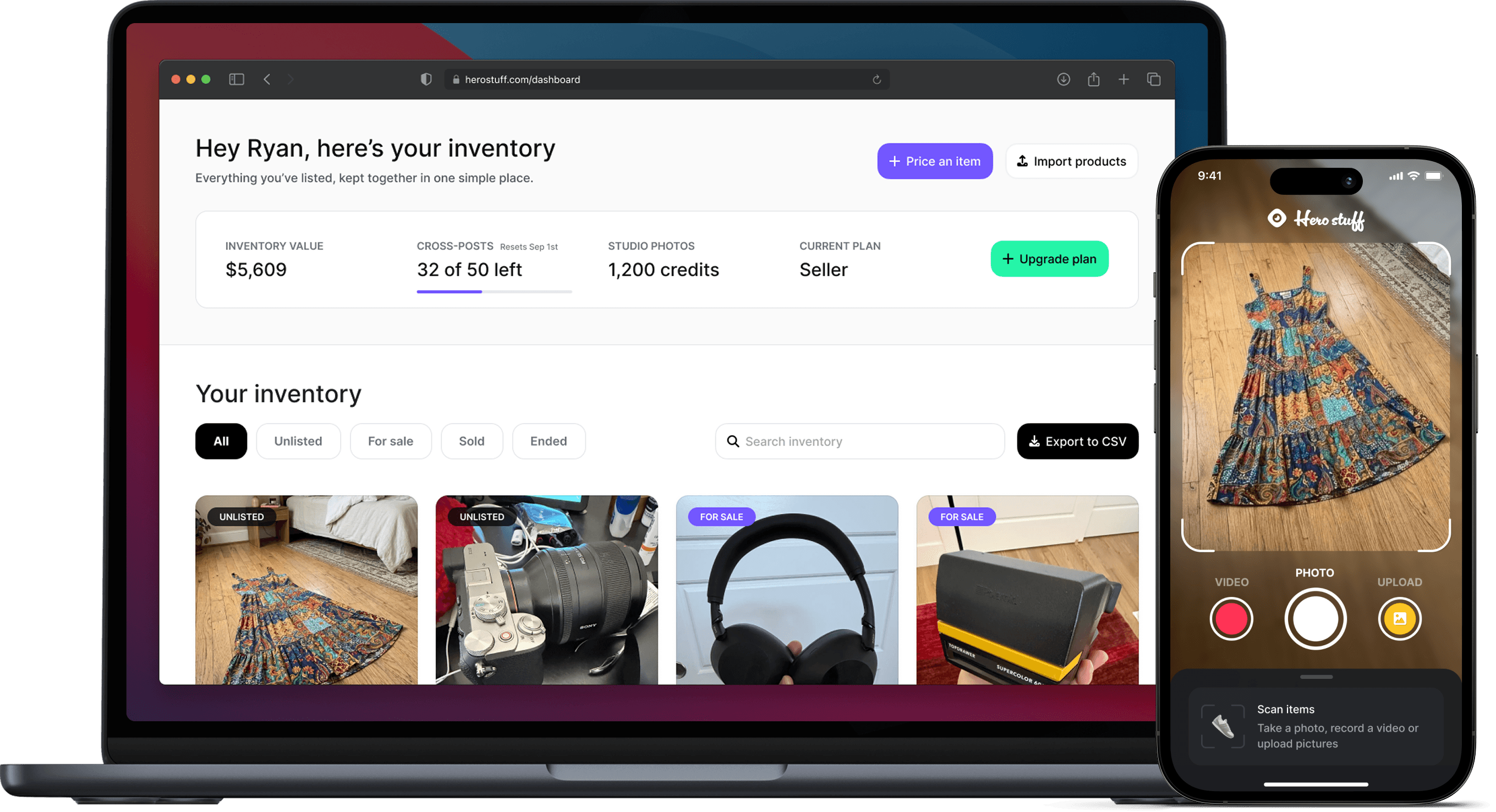
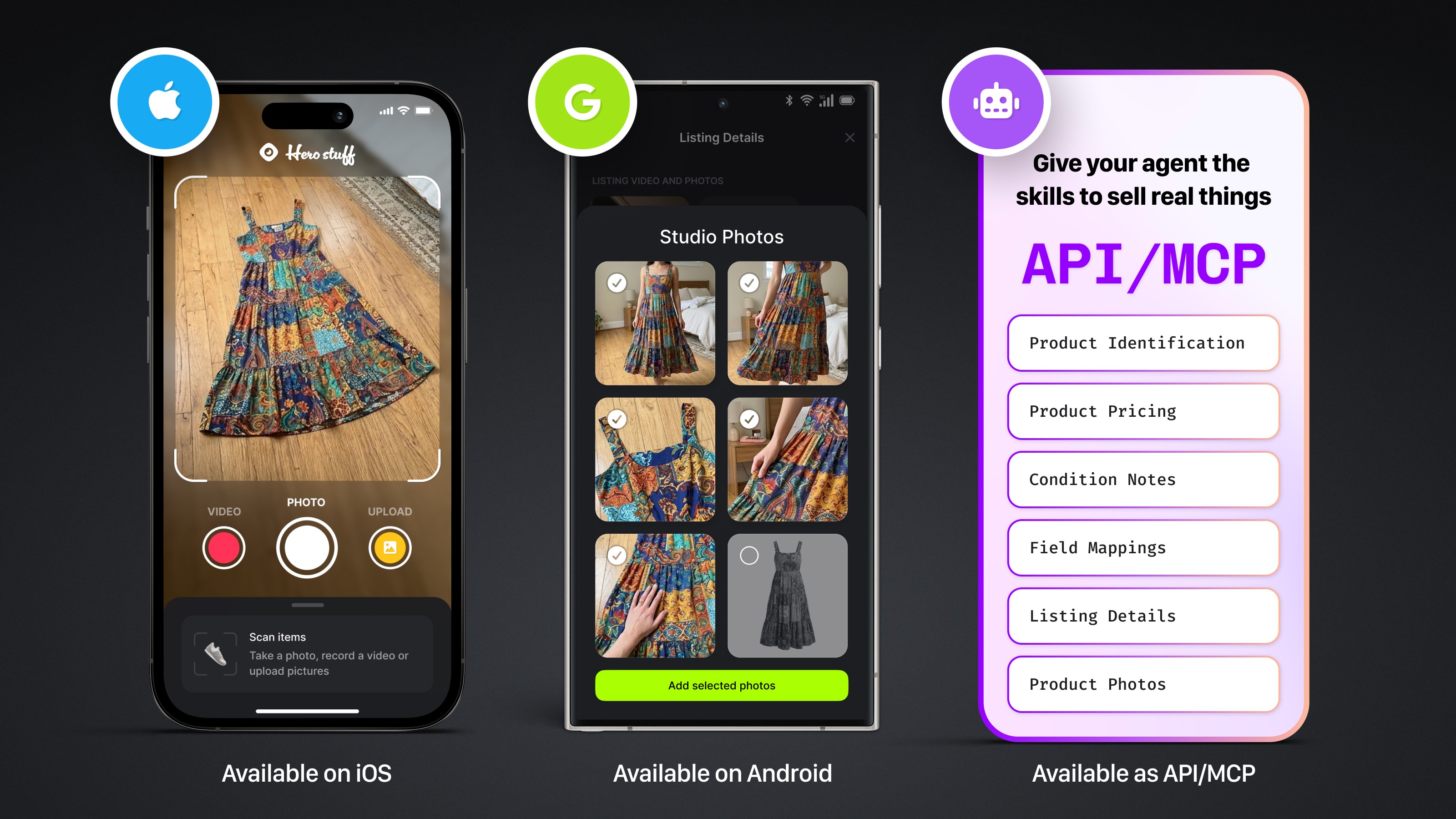
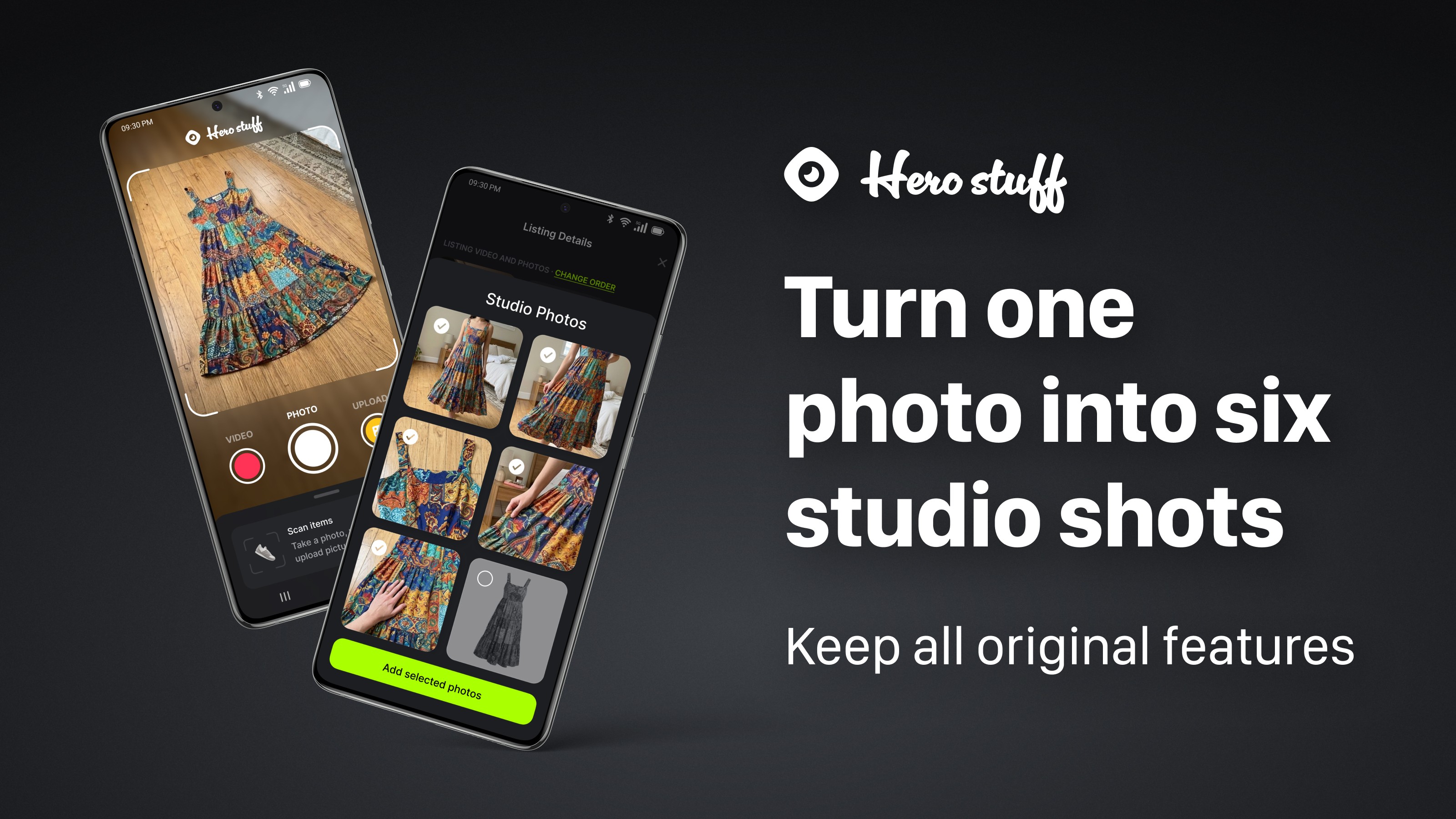
Hero Stuff is built for the shoebox-to-listing problem. Snap a photo of your find, and the AI will:
Generate a clean, searchable listing title
Write a complete product description
Suggest a price based on real sold-listing data
Remove the background from your photos so they look professional
For thrift store flippers, this means you can price an item before you buy it, then list it from the parking lot before you even drive home. That kind of velocity is what separates the people making real money from the people with cluttered garages.
If you want a deeper dive on listing efficiency, our guide on how to write a perfect used product listing in seconds walks through what makes a listing convert.
Final thoughts
Reselling in 2026 isn't about chasing the trendiest category or finding some secret hot item. Online resale is expected to continue growing 13% annually through 2029 (Capital One Shopping), which means the demand isn't going anywhere. What separates people making consistent income from people with cluttered garages is a sourcing routine, a trained eye, and a fast workflow from "found it" to "listed it."
Start with one category you find interesting, learn it deeply, and then expand. The thrift store down the street has more profit hiding in it than most people realize. You just need to know what you're looking for.
Happy flipping ✌️
How to Import Shopify or WooCommerce Products to eBay and Facebook Marketplace
How to Import Shopify Products to eBay with Hero
Hero now does bulk: connect Shopify, import your catalog, list everything

Hero is now available globally 🇩🇪 🇪🇬 🇮🇳
Four new ways to sell with Hero
Introducing Studio Photos: Turn one photo into six studio shots
How to factory reset an iPad before selling it (step-by-step)