Ebay fees explained: What sellers pay in 2026
Most sellers learn about eBay fees the hard way. They price an item, it sells, and then they check their payout and wonder where the money went. It is frustrating to see a $50 sale turn into a $37 payout. If you are just starting out, it helps to read how to sell on eBay before you list your first item.
The eBay fee structure is not impossible to understand, but it has moving parts. Here is the breakdown for 2026.
Ebay's fee structure
Every sale runs through at least two fees.
Insertion fees
Ebay gives you 250 free listings per month. Once you go over that limit, you pay $0.35 per listing. If your item does not sell and you relist it, each relist counts against that 250. This is usually fine for casual sellers, but if you have a lot of inventory, it adds up.
Final value fees
This is the main cost. When your item sells, eBay takes a percentage of the total transaction. This includes the sale price, shipping, and taxes. The standard rate for most categories is 13.25% on the first $7,500, then 2.35% on the rest. There is also a flat $0.30 charge per order.
Payment processing
Ebay processes payments through its own system. The cost is already included in the final value fees. You do not pay a separate processing fee.
Promoted listings
This is optional. If you use it, you set an ad rate. eBay only charges this if a buyer clicks your promoted listing and then buys the item. Rates vary, but sellers often set them between 2% and 15%.
How fees differ by category
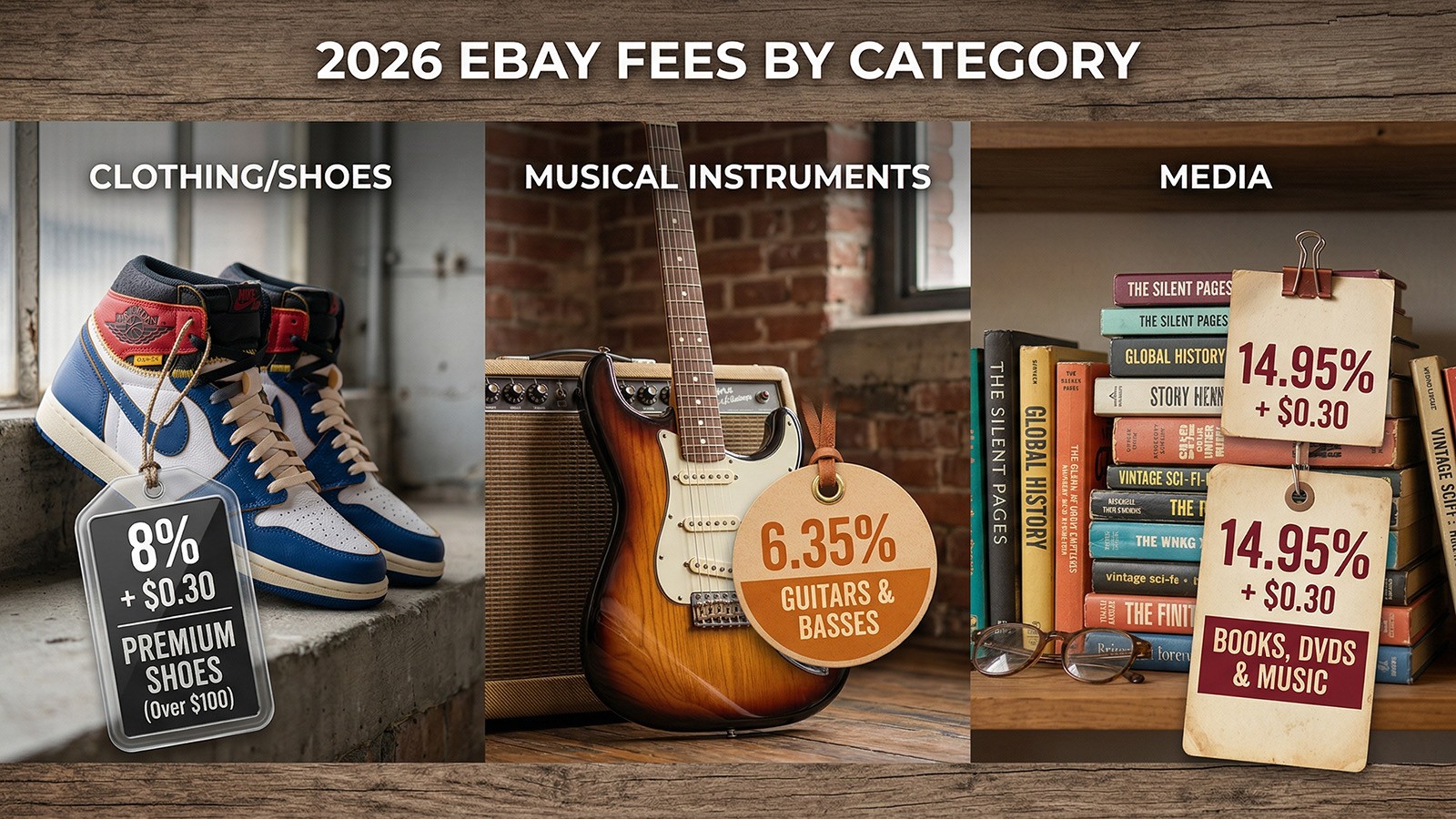
The 13.25% rate is the default, but some categories are cheaper.
Category | Final value fee (up to $7,500) |
Most categories | 13.25% + $0.30 |
Books, DVDs, and music | 14.95% + $0.30 |
Clothing and shoes (over $100) | 8% + $0.30 |
Guitars and basses | 6.35% + $0.30 |
Heavy equipment | 2% (capped at $300) |
Clothing is more seller friendly if you sell items over $100. Under that amount, you are still at the standard 13.25%. If you sell a lot of used clothing, that threshold matters.
Ebay store vs. no store: When it makes sense
Ebay offers store subscriptions. The main draws are more free listings and reduced fees in some categories. For most resellers, the question is whether a store saves more in fees than it costs.
At $27.95 a month for a Basic store, you pay about $335 a year. If you list fewer than 330 items a month, the extra listings do not help. But if you have a high volume of inventory and relist often, the savings on insertion fees can cover the cost.
Real examples: What you keep on a sale
Let’s look at a standard category sale with free shipping. No promoted listings, no store.
$50 sale (a used gaming controller)
Final value fee: $6.93
Estimated shipping: $6.00
You keep: $37.07
$100 sale (a jacket or phone case)
Final value fee: $13.55
Estimated shipping: $8.00
You keep: $78.45
$300 sale (a used laptop or camera)
Final value fee: $40.05
Estimated shipping: $15.00
You keep: $244.95
Shipping costs are a real cut of your margin. Many sellers underestimate them. If you add a 5% ad rate to that $300 example, you pay another $15. That takes your take-home pay down to $230. For more help on setting the right numbers, check out the ultimate guide to pricing used items online.
How Hero Stuff helps
Pricing used gear is often a guessing game. Hero Stuff’s tool pulls comparable sold listings to anchor your price to what buyers pay. It also speeds up the writing. Titles and descriptions are the part most sellers rush, and a weak listing hurts your chances. Hero Stuff generates both in seconds. You can also read more on how to write a perfect used product listing.
Tips to minimize fees
There is a ceiling to how much you can reduce fees, but there are ways to keep more money.
Price to account for fees up front
Decide what margin you need, add eBay’s cut, and list at that price. Pricing based on what you want to net is the cleanest way to avoid surprises.
Charge for shipping accurately
The eBay fee applies to the total sale, including shipping. If you charge the buyer for shipping separately, that amount is still in the fee calculation. Accurate shipping charges mean buyers pay what it costs, which removes the risk of you losing margin.
Use promoted listings only when needed
Promoted listings are useful for competitive categories. They are less useful for items that already rank well. Applying a 10% ad rate to items that would have sold anyway is just a fee you did not need to pay.
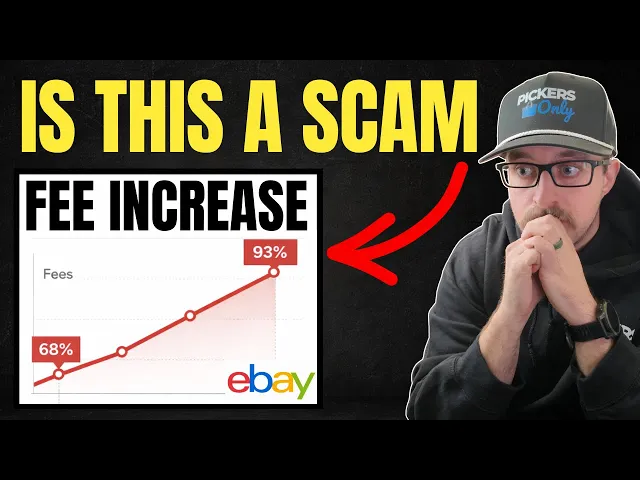
Even if your item ranks well organically, one click on a sponsored slot can lock in that fee for the eventual organic buyer under eBay's new 2026 rules. Check this video to see the data...
Know your category
If you sell in a lower fee category, make sure eBay has the right category selected. Miscategorized items sometimes fall into the standard 13.25% bracket when they would qualify for a lower rate.
The bottom line
Ebay takes about 13.25% of what buyers pay, plus $0.30 per order. You also pay fees on shipping. For most sellers, you keep between 82 and 86 cents on the dollar before your cost of goods. That is a fair deal for access to eBay’s buyers, but it means your pricing needs to account for those fees from the start.
Happy flipping 🏴☠️
How to Import Shopify or WooCommerce Products to eBay and Facebook Marketplace
How to Import Shopify Products to eBay with Hero
Hero now does bulk: connect Shopify, import your catalog, list everything

Hero is now available globally 🇩🇪 🇪🇬 🇮🇳
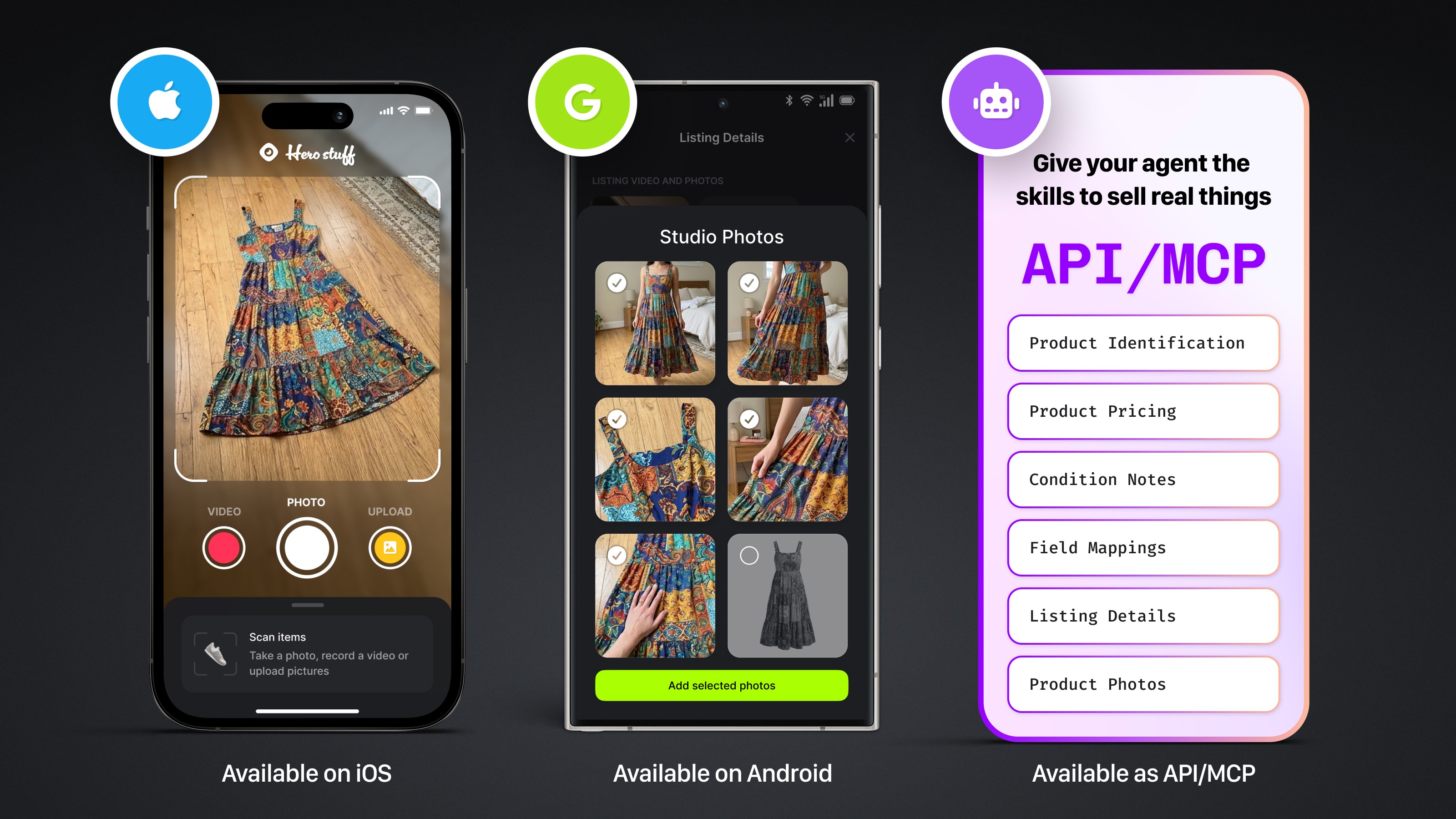
Four new ways to sell with Hero
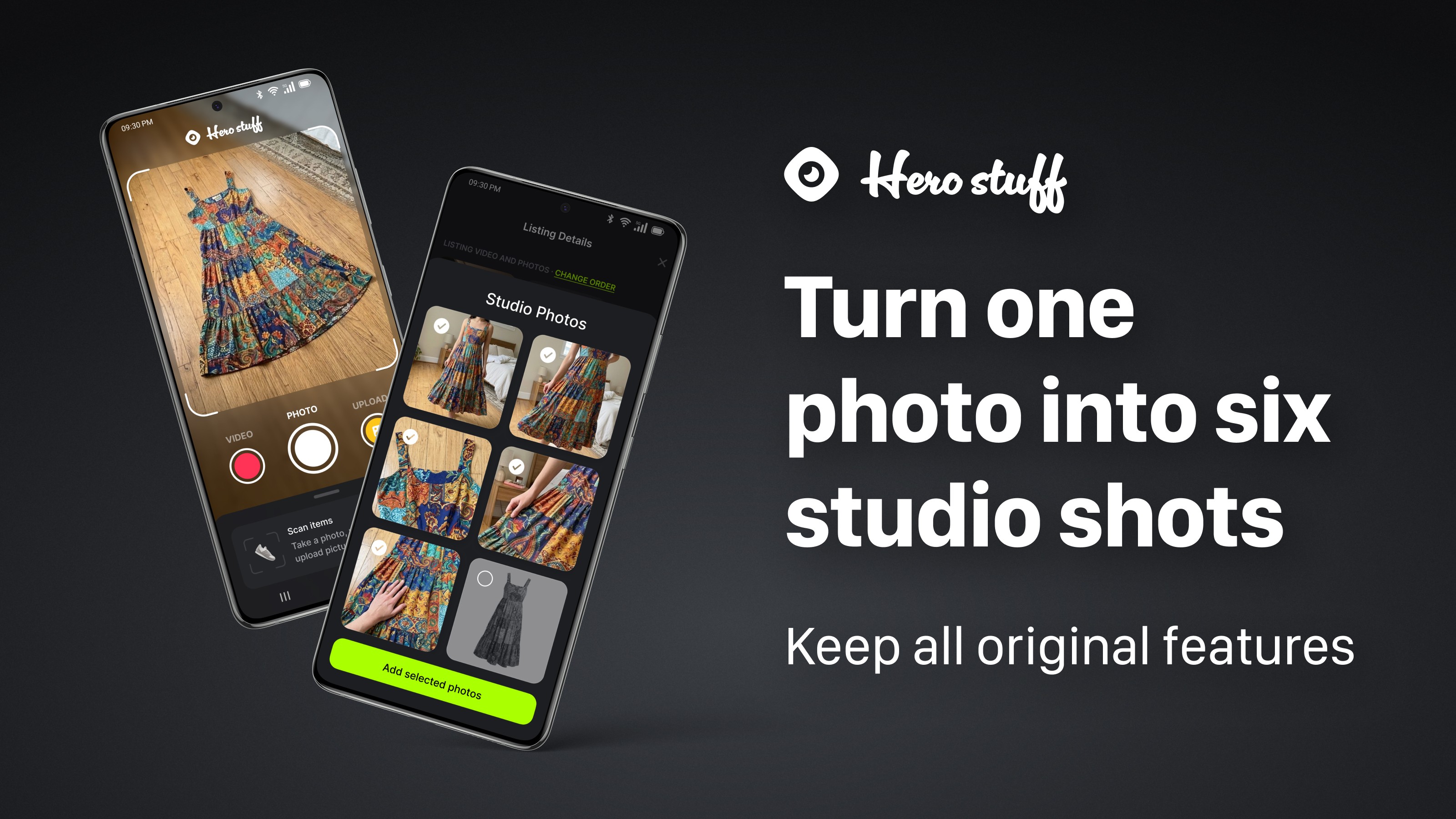
Introducing Studio Photos: Turn one photo into six studio shots

How to factory reset an iPad before selling it (step-by-step)