The ultimate guide to pricing used items online
eBay
How to
Dec 8, 2025

Pricing used items can be confusing. You want to move inventory fast, but you also want to earn the maximum profit possible. It’s a delicate balance.
This guide provides a proven process that works across all major marketplaces. Whether you are selling a vintage camera, a designer jacket, or a bundle of toys, you will learn how to research market value, analyze “comps” (comparables), and set the perfect number to get buyers interested right away.
Why pricing matters more than you think
Choosing the right price isn't just about money; it affects the entire lifecycle of your listing. Your price dictates three major outcomes:
Speed: How fast your item sells.
Margin: How much profit you actually keep.
Visibility: How high your listing ranks in search results.
Pro Tip: Most marketplaces (like eBay and Poshmark) use buyer engagement signals to rank listings. If your price is too high, fewer people click, sending a “weak” signal to the algorithm. Get the number right, and your click-through rate improves, causing your listing to rise to the top of the search results.
Step 1: Check recently sold or active prices (the “comps”)
Current resale value is based on what buyers actually paid, not what other sellers are hoping to get. Start by checking historical data.
Where to look:
eBay: Filter search results by “Sold Items” and “Completed Items.” (view example)
Facebook Marketplace: Browse active listings to see what competitors are asking in your area. (view example)
Poshmark: Filter by “Availability: Sold” to see what clothing is moving for. (view example)
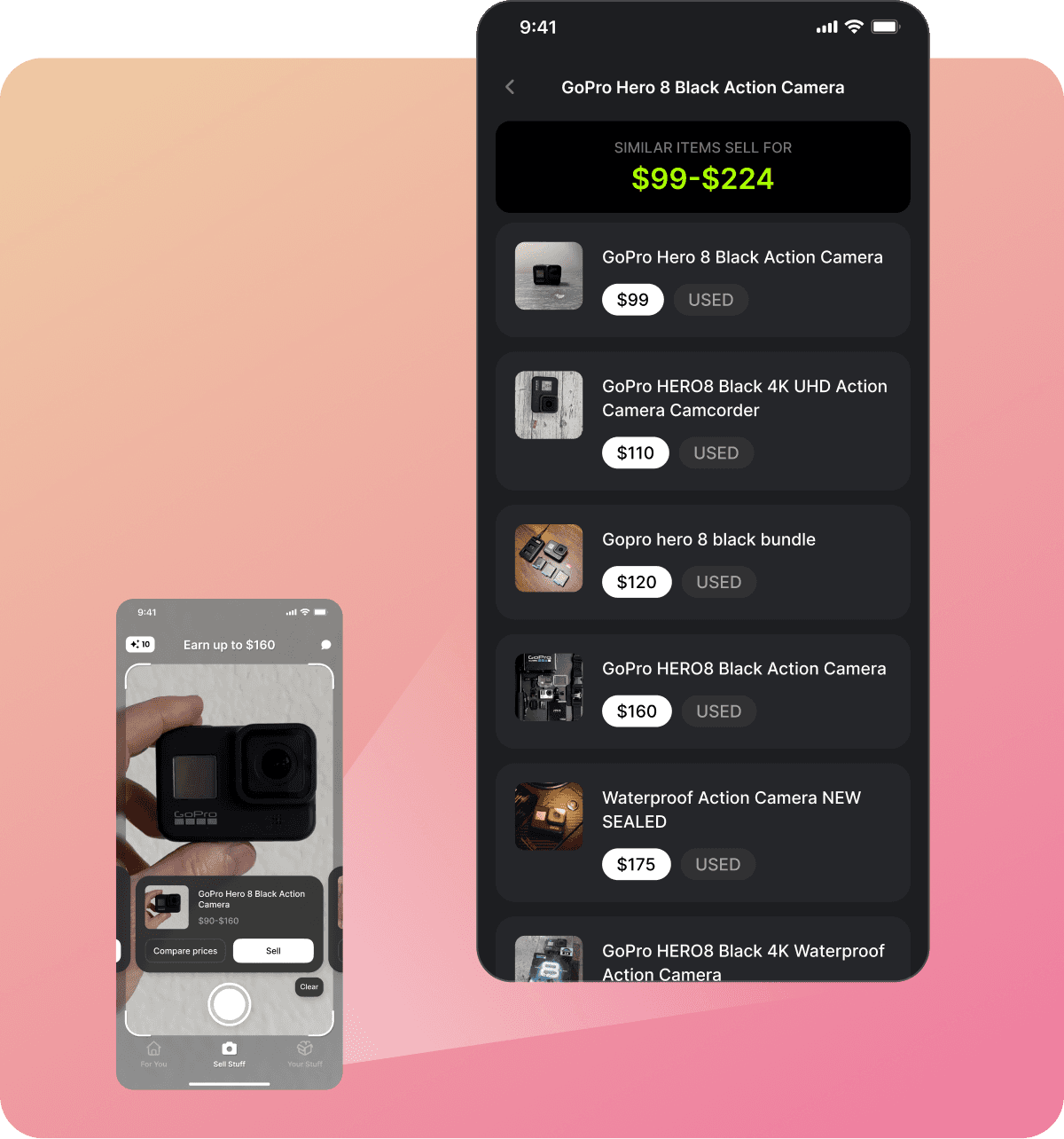
Hero Stuff: Use this free app for instant price insights and fast cross-platform comparisons (download)
What to compare:
Specifics: Model, size, color, and edition (first editions vs. re-releases).
Condition: Is yours better or worse than the sold item?
Inclusions: Do you have the original box, manual, or accessories?
Fulfillment: Are you offering free shipping or local pickup?
The more similar the sold listing is to yours, the more accurate your pricing data will be.
Step 2: Understand how condition affects value
Condition is the single biggest variable in the second-hand market. Be critical of your own items.
Standard condition categories:
New / Like New: Unopened or unused. Commands the highest price.
Excellent: Used, but looks new. No visible flaws.
Good: Functional with minor cosmetic wear.
Fair: Visible wear, scratches, or fading, but fully functional.
Heavily Used / For Parts: Broken or significantly damaged.
Pricing strategy by condition:
Excellent items can be priced at the top of the market range.
Good items typically fall in the middle (the average sold price).
Fair items need a discount to attract interest over better-quality competitors.
Note: Honest descriptions reduce return rates. If an item has a flaw, photograph it clearly and price accordingly. Buyers appreciate transparency 🙏
Step 3: Adjust for demand and seasonality
Not all items sell at the same speed year-round. Demand shifts based on the calendar.
Spring/Summer: Outdoor gear, cameras (wedding/travel season), and patio furniture.
Fall: Back-to-school tech, winter clothing, and heaters.
Winter: Holiday toys, heavy coats, and indoor entertainment.
Year-Round: Baby gear, tools, and kitchen appliances.
The Rule: If demand is high (peak season), price toward the upper end. If it is the off-season, you must price competitively to move the item.
Step 4: Compare across multiple marketplaces
Each marketplace has a unique audience and fee structure. Your price on Poshmark might be different than your price on Facebook Marketplace.
eBay: Deep search volume. Buyers are looking for specific models and are willing to pay for shipping.
Facebook Marketplace: Local buyers. Great for avoiding shipping fees and selling large items.
Poshmark: Fashion-focused. Buyers expect room to negotiate (offers).
Mercari: General goods. Buyers look for fair prices and often expect free shipping.
OfferUp: Strong for local pickup and quick cash deals.
Step 5: Decide on a “high” or “low” strategy
There are two ways to enter the market. Both can be profitable depending on your goals.
Strategy A: Price High (The “Anchor” Price)
Use when: Your item is rare, in perfect condition, or includes all accessories.
Goal: Maximize profit per unit.
Risk: It may sit for weeks or months.
Strategy B: Price Low (The “Volume” Strategy)
Use when: You want a fast sale, the item has cosmetic wear, or there are many competitors.
Goal: Quick cash flow and algorithm boosts.
Benefit: A low starting price increases clicks and “saves,” which signals to the marketplace that your item is popular.
Step 6: Use AI to generate a competitive price
Manual research takes time. AI tools can now analyze model numbers, photos, and condition details to automate the process.
Tools like Hero Stuff use this technology to generate a fair market price in seconds. Instead of opening 20 browser tabs to check comps manually, you get a price range that reflects real-time demand.
Benefits of AI-powered pricing:
Speed: Research takes seconds, not minutes.
Accuracy: Reduces human error and emotional pricing.
Scale: Makes it much easier to list 10+ items a day.
Step 7: Test and adjust
Pricing is not a “set it and forget it” decision. Successful sellers monitor buyer behavior.
The 48-hour rule: Track views and messages in the first 24 to 48 hours.
No views/clicks? Your price is likely too high, or your main photo is weak.
Many views but no sales? Your price is okay, but maybe your shipping is too expensive.
Instant messages? You may have priced it too low (but you will get a quick sale!).
If engagement slows, drop the price by 5-10%. This often triggers a notification to interested buyers and bumps your listing back up in search.
The quick pricing formula
Use this simple rule to get a starting number:

Keep in mind fees and shipping costs when calculating your final profit.
Final thoughts
Good pricing is the fastest way to convert clutter into cash. Once you understand the range, adjust for condition, and check seasonality, you will consistently hit the sweet spot. Pair this strategy with clear photos and a strong title, and you will sell much faster than the average seller.
If you want a simpler workflow, Hero Stuff can price your item automatically based on real sold data. That means fewer decisions, fewer tabs, and faster sales.