
How to sell used clothing for maximum profit
eBay
How to
Jan 25, 2026
The secondhand clothing market has exploded, with millions of sellers turning closets into significant revenue streams.
Whether you are decluttering a few items or scaling a resale business, the difference between a quick sale and an item that languishes for months comes down to presentation, data-driven pricing, and strategic “findability.”
This guide provides the ultimate blueprint for maximizing your profit margins using professional workflows and AI-driven efficiency.
Choose the right marketplace for your inventory
Not all platforms are created equal. Choosing the right “home” for your item ensures you reach the highest-intent buyers while minimizing fee leakage.
Poshmark: Best for mid-to-high-end contemporary brands (e.g., Lululemon, Anthropologie). It uses a social-sharing model that requires active engagement but offers a simplified shipping process.
eBay: The undisputed king for vintage, rare collectibles, and men’s streetwear. Its global reach allows you to command premium prices for unique pieces.
Depop: The go-to for Gen Z and millennial trends, specifically Y2K aesthetic and “thrifted” styles. (Note: As of 2026, Depop has removed seller fees in many regions, making it highly profitable for trendy items).
Facebook Marketplace: A “sell-it-fast” marketplace perfect for everyday brands and household bundles. It attracts bargain hunters looking for quick deals.
Vinted: Ideal for lower-cost, everyday clothing where the buyer pays the protection fee, allowing you to keep a higher percentage of the sale price.
Master the hero shot with professional photography
Your photos are your primary sales tool. High-quality imagery builds immediate trust and reduces the “return rate” by showing the item accurately.
Prioritize natural light: Shoot during the day near a large window. Natural light provides the most accurate color representation, which is critical for buyer satisfaction.
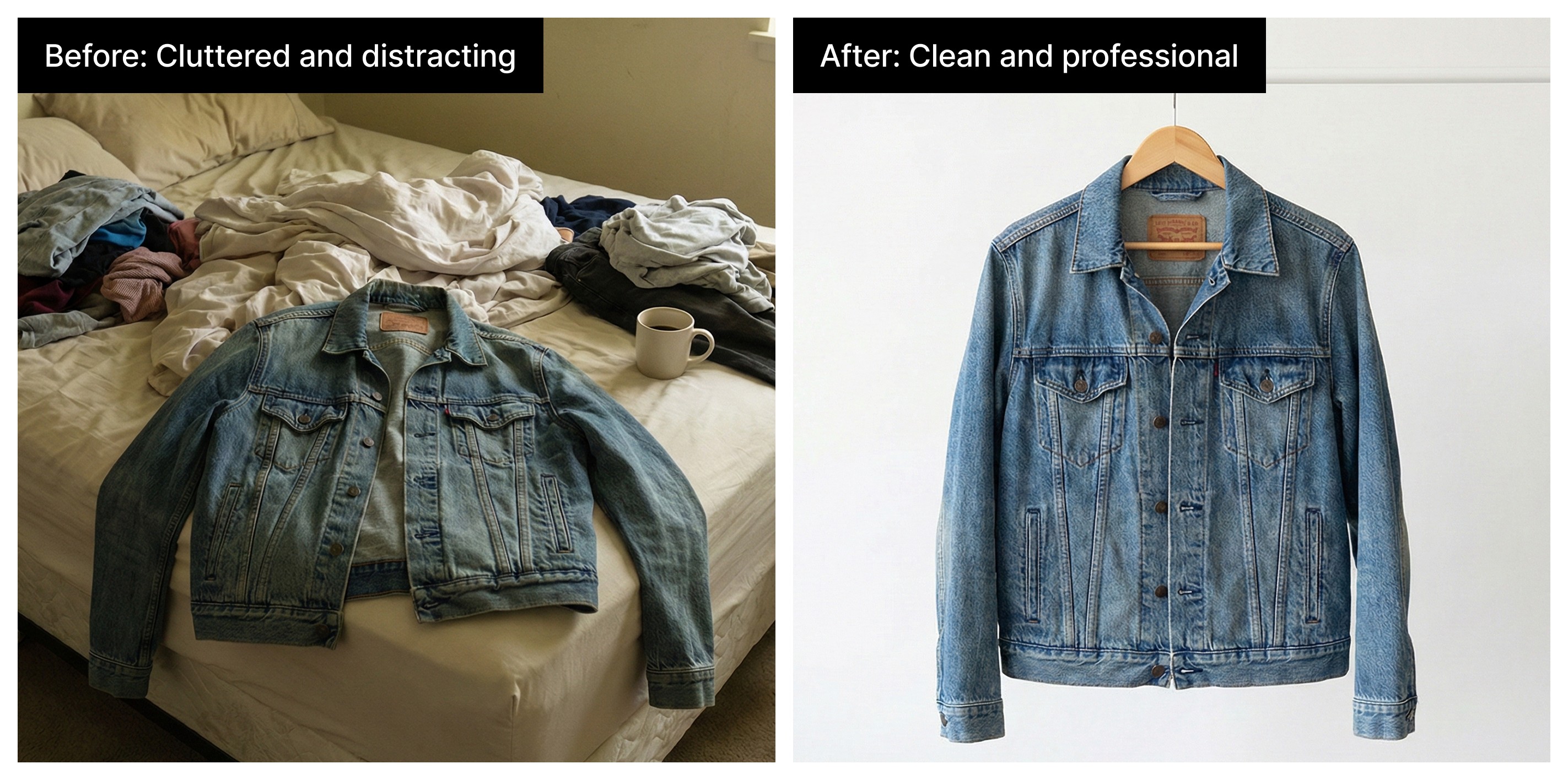
Choose your style: Flat lays are excellent for t-shirts and sweaters, while hanging items are best for showing the drape of dresses and coats.
Capture the details: Beyond the front and back, always photograph the brand label, the fabric care tag, and any minor flaws. Transparency is the best defense against disputes.
For a deeper dive into creating high-converting imagery, check out the ultimate guide to product photography to learn how to shoot photos that sell.
💡 Expert tip: Transparency about condition reduces returns and builds buyer confidence. Most platforms allow 8-12 photos, so use every available slot. 💡
Use “aesthetic” keywords to dominate search results
Strategic tagging determines whether your item appears when a buyer searches for a specific “look.”
Structure your title for SEO: Use the formula: Brand + Style/Aesthetic + Item Type + Size + Color.
Incorporate “vibe” keywords: Don’t just list a dress. Instead, identify the aesthetic. Use terms like “coastal grandmother,” “gorpcore,” “minimalist,” or “dark academia” to match current fashion search trends.
Be specific with colors: Instead of “green,” use “sage,” “olive,” or “emerald.” Precise color matching captures shoppers with specific needs.
Eliminate “buyer friction” with precise measurements
Sizes vary wildly between brands. Providing measurements is the single most effective way to “convert” a browser into a buyer.
For tops: Measure chest (pit-to-pit), shoulder width, and total length.
For bottoms: Measure waist (laid flat), rise, and inseam.
Pro tip: Create a standard measurement template in your phone’s notes app to copy-paste into every listing. This creates a professional, consistent look across your shop.
Scale your volume with AI and automation
The most successful sellers don’t work harder; they work smarter by automating the repetitive tasks of listing.
Background removal: Use tools to instantly clean up messy backgrounds, turning a bedroom shot into a professional studio-style “floating” product image.
Automated descriptions: AI can now generate keyword-rich descriptions from a single photo, ensuring your search signals are high without you writing a single word.
Smart pricing: Instead of guessing, use data to analyze “sold” listings across multiple platforms to suggest a competitive price range that maximizes profit while ensuring a fast turnaround.
To make this process even faster, you can use Hero Stuff to generate titles, prices, and descriptions automatically. Download Hero Stuff for iOS or Android to start optimizing your listings directly from your phone.
Final thoughts on maximizing resale profit
The resale market rewards the professional over the casual seller. By combining the “human touch” of great curation with the power of modern tools, you can turn a side hobby into a high-margin business. Focus on presentation, lead with data, and always price for the market you are in.
Happy flipping 🤑